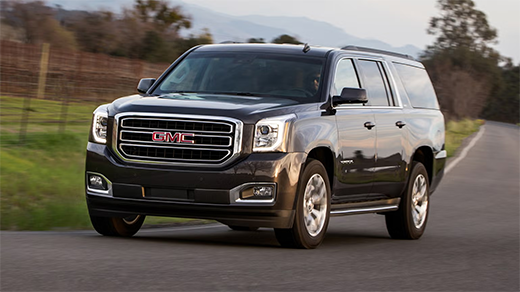
8-Speed Shudder
Affected Years: 2015–2020 GMC Yukon & Yukon XL
The GMC Yukon and Yukon XL used the same 8L90 8-speed automatic transmission as GM's other full-size SUVs during the 2015–2020 model years, and they carry the same documented torque converter shudder complaint. Pensacola Yukon owners dealing with this issue experience a steady vibration at highway speeds that is completely unlike normal road feedback — it is consistent in a specific speed range under light throttle, disappears when you accelerate firmly or ease off completely, and comes right back every time you return to that cruise condition. Many owners initially associate it with tires or wheel balance before recognizing that the pattern is tied to throttle input rather than road surface or speed variation.
Root Cause: The 8L90's original factory fluid formulation was susceptible to moisture absorption over time, which degraded the anti-shudder friction properties the torque converter lock-up clutch depends on for clean engagement. As the fluid's protective qualities declined, the lock-up clutch began alternating between slipping and grabbing at cruise speeds instead of engaging smoothly. The cycling creates the vibration drivers feel. The worn converter material then circulates as debris through the rest of the transmission and contributes to wear beyond the converter itself.
Diagnosis & Fixes: Road test confirmation of the shudder pattern, transmission fluid condition assessment, and scan data review of torque converter slip data together establish the diagnosis and indicate how far the underlying wear has progressed. Early-stage cases may respond to a fluid exchange; persistent shudder after fluid service means the converter itself needs to be replaced.
- DIY: Confirm the shudder at steady cruise speed under light throttle and review whether the transmission fluid has been exchanged with an updated synthetic specification since the vehicle was new — original fluid in a 2015–2020 Yukon is almost certainly contributing to the shudder.
- Transmission Diagnostic: Avg. Cost $150 — Contact Specialist
- Pro Fix: Perform a complete fluid exchange with Mobil 1 Synthetic LV ATF HP to restore the anti-shudder properties the lock-up clutch needs for clean engagement.
- Transmission Fluid Exchange: Avg. Cost $350 — Contact Specialist
- Pro Fix: Replace the torque converter when the shudder persists after a proper fluid exchange or when debris indicates converter clutch wear has already advanced significantly.
- Torque Converter Replacement: Avg. Cost $2,200 — Contact Specialist
10-Speed Hard Shifting
Affected Years: 2021–Present GMC Yukon & Yukon XL
The 10-speed 10L80 in the current-generation GMC Yukon was designed to deliver a wide gear spread for improved efficiency and maximum towing flexibility. Under normal conditions it accomplishes that. But under other conditions — first gear engagement from rest, Reverse selection, specific deceleration downshifts — the transmission produces a hard bang or violent clunk that is out of place in a premium full-size SUV and inconsistent enough to keep Pensacola Yukon owners uncertain about what they are going to get on any given drive. The Yukon XL's longer wheelbase and heavier curb weight make the physical impact of these harsh shifts more pronounced, and owners who use the vehicle for regular hauling or towing find the behavior both jarring and concerning for long-term drivetrain health.
Root Cause: The 10L80 valve body has to manage precise hydraulic pressure across ten forward gear ratios. When internal valve bore wear allows hydraulic pressure to escape before the target clutch pack is fully engaged, the clutch catches with a pressure spike rather than a controlled ramp. The bang the driver feels is that pressure spike materializing as a physical jolt through the drivetrain. This is a progressive wear issue — the worse the valve bore wear, the more severe the shift quality deterioration becomes over time.
Diagnosis & Fixes: A transmission scan for pressure and solenoid codes, a characterized road test that reproduces the specific harsh shifts, and line pressure measurement during the affected engagement sequences together determine whether valve body repair will resolve the issue or whether the damage extends deeper into the mechanical assembly.
- DIY: Track exactly which shift or gear selection produces the most severe bang, whether it occurs consistently or intermittently, and whether it has been getting more pronounced recently — all of this helps the diagnostic technician quickly narrow down the likely cause.
- Transmission Diagnostic: Avg. Cost $150 — Contact Specialist
- Pro Fix: Rebuild or replace the valve body with updated components to restore the hydraulic pressure precision needed for smooth 10-speed shift execution.
- Valve Body Rebuild: Avg. Cost $1,200 — Contact Specialist
- Pro Fix: Reprogram the transmission control system after valve body repair to recalibrate the adaptive shift strategy for the updated hardware.
- Transmission Reprogramming: Avg. Cost $250 — Contact Specialist
Torque Converter Failure
Affected Years: 2007–2020 GMC Yukon & Yukon XL (6-speed and 8-speed applications)
Torque converter failure on the GMC Yukon is something most Pensacola owners do not anticipate until the symptoms arrive in close succession — slipping under acceleration, overheating warnings on the gauge cluster, and eventually fluid that looks dark and carries a metallic shimmer under light. Each of these stages is the transmission reporting the same ongoing problem: converter friction material has broken down and the debris it generates is moving through the entire fluid circuit. By the time the fluid looks glittery, damage has typically reached the clutch packs and may have reached the pump as well. The earlier the converter failure is caught, the more contained the repair remains.
Root Cause: Converter friction material wears from heat accumulation, high-load cycles, and normal longevity. When the material breaks down, the debris it releases travels freely through every component the fluid touches — pump bores, valve body passages, and the friction surfaces of every clutch pack in the unit. Pensacola Yukons subjected to regular towing across the Pensacola Bay area or sustained highway driving in Gulf Coast heat are the ones most likely to experience converter wear accelerated by chronic thermal stress.
Diagnosis & Fixes: Road test for slip under load, fluid and pan inspection for debris and contamination, scan data review for ratio and slip codes — together these establish both the diagnosis and the extent of damage before a repair recommendation is made.
- DIY: The moment you notice slipping under load, unusual overheating warnings, or dark metallic-looking fluid, stop towing and get the transmission inspected before additional driving spreads the contamination further through the unit.
- Transmission Diagnostic: Avg. Cost $150 — Contact Specialist
- Pro Fix: Replace the failed torque converter promptly to limit how far the debris contamination spreads into the clutch packs and pump assembly.
- Torque Converter Replacement: Avg. Cost $2,000–$2,200 — Contact Specialist
- Pro Fix: Rebuild the transmission with replacement internal components when clutch contamination and hard part damage are already confirmed during inspection.
- Full Transmission Rebuild: Avg. Cost $6,800 - $9,500 — Contact Specialist
Transmission Slipping
Affected Years: 2007–Present GMC Yukon & Yukon XL
Transmission slipping on the GMC Yukon in Pensacola often first becomes apparent under conditions that put genuine demand on the drivetrain — pulling onto the busy Pensacola Bay Bridge on-ramp, towing a trailer to a boat launch, or climbing a highway grade at speed with a full passenger load. The engine sounds willing and the throttle responds, but the vehicle does not accelerate to match. The gap between engine output and vehicle response is the slip, and every time it happens the worn friction surfaces are generating more heat, damaging more fluid, and wearing through more of the remaining clutch material in a cycle that accelerates rather than stabilizes.
Root Cause: Friction clutch packs inside the GMC Yukon's transmission are designed to handle the engine's torque output and transfer it cleanly to the drivetrain across every gear. When those friction surfaces wear down from heat, high-mileage use, or fluid degradation, they lose the grip needed to hold the gear under load. Fluid that has broken down past its protective threshold contributes to both faster clutch wear and reduced hydraulic pressure, compounding the clutch's inability to hold.
Diagnosis & Fixes: A complete diagnostic includes fluid and pan inspection for clutch debris, scan data for ratio error and slip codes, a road test confirming the slip pattern under load, and line pressure testing to determine whether pressure is a contributing factor or whether clutch wear alone is responsible.
- DIY: Reduce load and avoid aggressive acceleration as soon as slipping begins — the heat generated by each slipping event is the primary driver of how rapidly the remaining clutch material deteriorates toward a full rebuild being required.
- Transmission Diagnostic: Avg. Cost $150 — Contact Specialist
- Pro Fix: Perform a fluid and filter service if the slipping is early-stage and the pan shows no significant debris or signs of clutch material contamination.
- Fluid & Filter Service: Avg. Cost $300 — Contact Specialist
- Pro Fix: Rebuild the transmission with new friction and steel clutch components and updated hard parts when internal damage from clutch wear or debris contamination is confirmed.
- Full Transmission Rebuild: Avg. Cost $6,800 - $9,500 — Contact Specialist
- Pro Fix: Service or replace transmission cooling components if overheating was a contributing factor to the clutch failure.
- Transmission Cooling Repair : Avg. Cost $650 — Contact Specialist
Limp Mode
Affected Years: 2007–Present GMC Yukon & Yukon XL
Limp mode on the GMC Yukon transforms what was normal SUV driving into something that feels like operating a much older and much less capable vehicle. The power is gone, the shifting is frozen in a single gear, and the warning light makes clear that something has gone wrong inside the transmission. For Pensacola Yukon owners caught in this condition during rush-hour traffic on Davis Highway or coming off the interstate, the sudden loss of normal acceleration creates real stress and a legitimate safety concern. The Yukon will not exit limp mode through driving — it requires a proper scan and the underlying fault to be addressed before the transmission control module will allow normal operation to resume.
Root Cause: The transmission control module activates limp mode when it reads a fault that indicates normal shifting would risk geartrain damage. The triggering condition can be electrical — a speed sensor, solenoid, or wiring fault — or it can be hydraulic or mechanical, such as a pressure event, an overheating incident, or internal slippage that crossed the module's protection threshold. Because the same limp mode response can come from a wide range of different faults, the scan data is the only reliable starting point for determining what actually needs to be repaired.
Diagnosis & Fixes: A complete TCM scan with freeze-frame and live parameter data points toward the specific fault category — electrical, hydraulic, or mechanical — and guides the repair path before any parts are changed.
- DIY: Write down exactly which warning lights appeared, what gear the Yukon is stuck in, and the circumstances when the limp mode event triggered — this information is directly useful during the diagnostic process and helps a specialist work faster toward the root cause.
- Transmission Diagnostic: Avg. Cost $150 — Contact Specialist
- Pro Fix: Replace a failed sensor or repair specific wiring faults when the diagnostic scan confirms an electrical cause for the limp mode event.
- Sensor or Wiring Repair: Avg. Cost $350 — Contact Specialist
- Pro Fix: Perform internal transmission repair when hydraulic pressure loss or mechanical failure is confirmed as the underlying cause.
- Internal Transmission Repair (rebuild): Avg. Cost $6,800 - $9,500 — Contact Specialist
Transmission Fluid Leaks
Affected Years: 2007–Present GMC Yukon & Yukon XL
A transmission fluid leak on a GMC Yukon in Pensacola tends to get pushed to the back of the maintenance queue — the vehicle is still driving fine, the spots under it are manageable, and there are more pressing things to deal with. But Gulf Coast heat ages the rubber seals, pan gaskets, and cooler line connections faster than most owners expect, and a slow steady seep from any of these points will steadily reduce fluid level over weeks of daily driving. The 8L90 and 10L80 transmissions are both sensitive to fluid level and operating pressure, and by the time slipping or shift quality changes become noticeable, the fluid level has already dropped far enough to create ongoing clutch wear that a seal repair alone cannot reverse.
Root Cause: The most frequent leak sources on the GMC Yukon are the transmission pan gasket, the transmission cooler lines and their fittings, and the axle seals at the CV shaft entry points into the transmission case. On higher-mileage Pensacola Yukons, the front pump seal is a less common but more significant leak point that typically requires the transmission to be removed for access and repair.
Diagnosis & Fixes: The case is cleaned, then UV dye or pressure testing is used to locate the exact leak source. Fluid level and condition are checked at the same time to determine whether secondary damage has already begun before the repair path is finalized.
- DIY: Lay cardboard under the Yukon after overnight parking to locate where fluid is dropping, and have the fluid level inspected before driving any significant distance once you have confirmed a leak is present.
- Leak Inspection: Avg. Cost $120 — Contact Specialist
- Pro Fix: Replace the specific leaking component — pan gasket, cooler line, or axle seal — based on the source identified during the diagnostic inspection.
- Transmission Leak Repair: Avg. Cost $400 — Contact Specialist
- Pro Fix: Repair the front pump seal or address major leaks that require transmission removal for proper access.
- Front Seal Repair: Avg. Cost $950 — Contact Specialist
Delayed Engagement
Affected Years: 2007–Present GMC Yukon & Yukon XL
Delayed engagement on the GMC Yukon in Pensacola follows a predictable progression that most owners can trace back if they think about it. It started on cold mornings — the Yukon paused in the driveway after a Drive selection before catching and moving — and it seemed connected to the temperature and fluid viscosity at startup. Then the delay started appearing after the vehicle had been sitting for a few hours in the Pensacola heat. Then it started happening even after a short warm stop. The pause got longer, and the clunk when it finally caught got harder. At each stage, the gap between what a properly functioning transmission does and what this one does has been widening — a clear sign that something hydraulic or mechanical is getting progressively worse rather than staying stable.
Root Cause: Hydraulic pressure recovery after a gear selection depends on the transmission pump, the integrity of the internal seals, and the condition of the valve body bores that regulate pressure flow. Fluid drain-back when the vehicle sits creates a normal brief lag that a healthy transmission overcomes almost instantly. When internal seals wear and valve body bores lose precision, the pressure recovery lag extends because the system cannot maintain the fluid charge in the circuits that need to be pressurized when a gear is selected. The clunk at final engagement is the clutch applying hard after receiving delayed pressure rather than a gradual controlled application.
Diagnosis & Fixes: Line pressure monitoring during gear engagement, fluid condition assessment, trouble code review, and cold-versus-warm delay comparison together guide the technician toward the correct repair without unnecessary internal disassembly.
- DIY: Time the delay consistently over a few days and note whether it is getting longer — and whether Reverse takes the same amount of time as Drive or one is significantly worse than the other, which helps narrow down the hydraulic circuit that is most affected.
- Transmission Diagnostic: Avg. Cost $150 — Contact Specialist
- Pro Fix: Service the fluid and filter if condition is poor and the engagement delay is still short enough that maintenance has a reasonable chance of providing improvement.
- Transmission Fluid Service: Avg. Cost $300 — Contact Specialist
- Pro Fix: Repair the valve body or replace worn internal seals when pressure testing confirms that hydraulic pressure recovery is the root cause of the engagement delay.
- Valve Body or Seal Repair: Avg. Cost $1,200 — Contact Specialist